
Investigate the zero-order spend before expanding traffic
What the review found
The search-term analysis describes 54.3% of spend on terms with no orders. It separates 11.9% on terms with more clicks from 42.4% in lower-evidence discovery.
 Enlarge image
The two zero-order segments use 54.3% of spend in this AED table. Segment labels describe the original audit’s thresholds; product margin and conversion evidence must determine the action, rather than a universal click cutoff.
Original audit image.Open full sizeWhy it matters commercially
An account can appear active while much of its budget produces no observed sales. Discovery still needs an allowance, and click counts alone do not prove a term should be blocked.
Recommended next move
Review irrelevant intent first, allow for attribution lag, and compare spend with a product-specific acquisition limit. Cap uncertain exploration and tighten repeated weak themes.
Back efficient segments using product-level margins
What the review found
The report’s under-20% ACoS segment generated 53.3% of attributed sales using 8.1% of spend. It also grouped less efficient segments separately.
Enlarge image The two zero-order segments use 54.3% of spend in this AED table. Segment labels describe the original audit’s thresholds; product margin and conversion evidence must determine the action, rather than a universal click cutoff.
Original audit image.Open full sizeWhy it matters commercially
The aggregate split identifies a budget question, but a fixed ACoS threshold does not establish profitability for every product.
Recommended next move
Validate each segment against landed cost, fees and returns. Check whether converting targets have room to scale before shifting incremental budget.
Use match type and placement evidence together
What the review found
Broad match was reported at 30.5% ACoS, versus 53.6% for exact and 51.7% for auto. Product Pages used 38.8% of spend for 28.3% of attributed sales.
 Enlarge image
The source compares exact, phrase, broad and automatic targeting. Broad has approximately 30.5% ACOS in this sample; that result supports a controlled product-level test, not a blanket match-type rule.
Original audit image.Open full size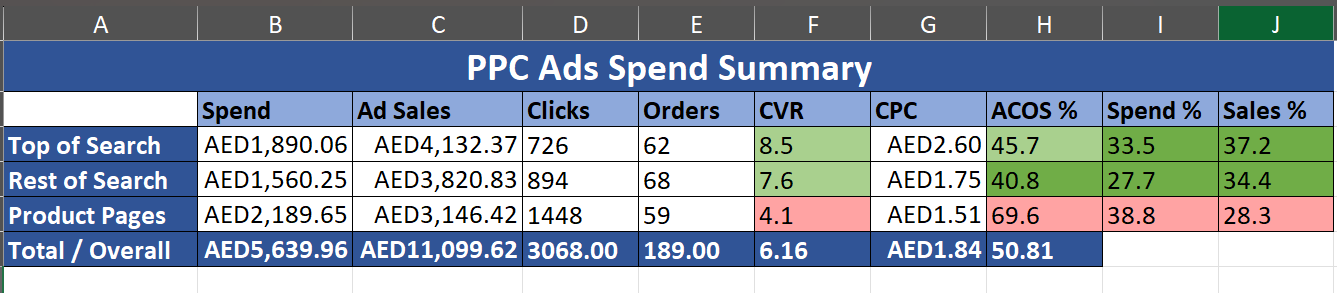 Enlarge image
Product pages consume 38.8% of spend and supply 28.3% of ad sales in this placement export. The analysis should be taken down to campaigns and targets before reallocating budget.
Original audit image.Open full sizeWhy it matters commercially
The result challenges a blanket preference for any one match type. A campaign’s actual queries and placements matter more than its label.
Recommended next move
Break the averages down by product and query. Test bid and placement changes on the material weak combinations while preserving productive discovery.
Replace copied assets and verify product claims
What the review found
The listing review identified images copied from other sellers and competitor packaging appearing in creative. Several draft claims also needed supporting product evidence.
 Enlarge image
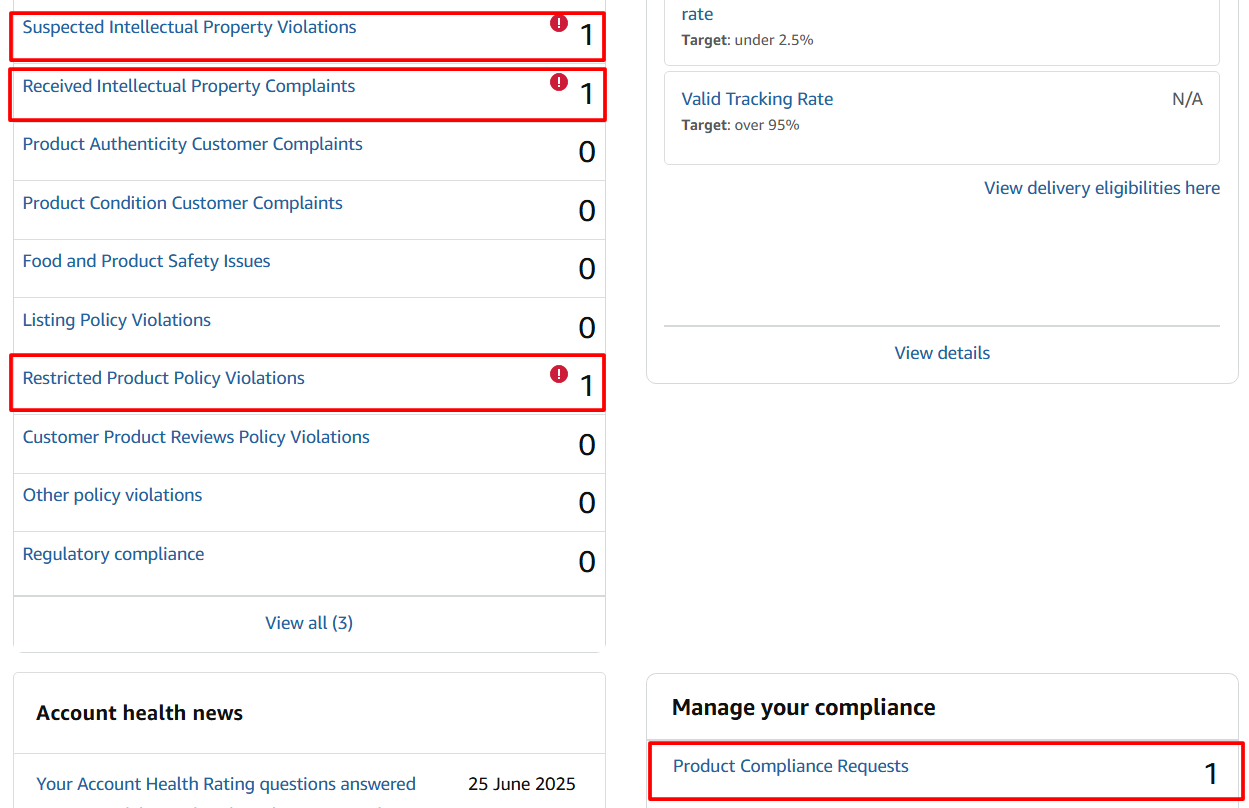
The historical account-health screenshot shows intellectual-property, restricted-product and product-compliance notices. It supports prioritizing original licensed content and reviewing the specific notices; it is not a statement of the account’s current status.
Original audit image.Open full sizeWhy it matters commercially
Creative ownership and inaccurate product representation can undermine listing continuity and buyer trust. Recoloring someone else’s asset does not resolve the underlying issue.
Recommended next move
Use original or properly licensed product assets, verify all specifications and remove unrelated packaging. Review content before funding additional traffic.
Set different growth tests for different products
What the review found
The review found different demand levels for the vacuum sealer, skin patches and shower filter. Its unit-sales targets were projections rather than measured outcomes.
Why it matters commercially
An identical daily-sales goal can misallocate effort when market demand and offer readiness differ.
Recommended next move
Prioritize relevant local-language query coverage and buying information for each product. Use actual search and order data to adjust the test budget rather than treating projections as commitments.